
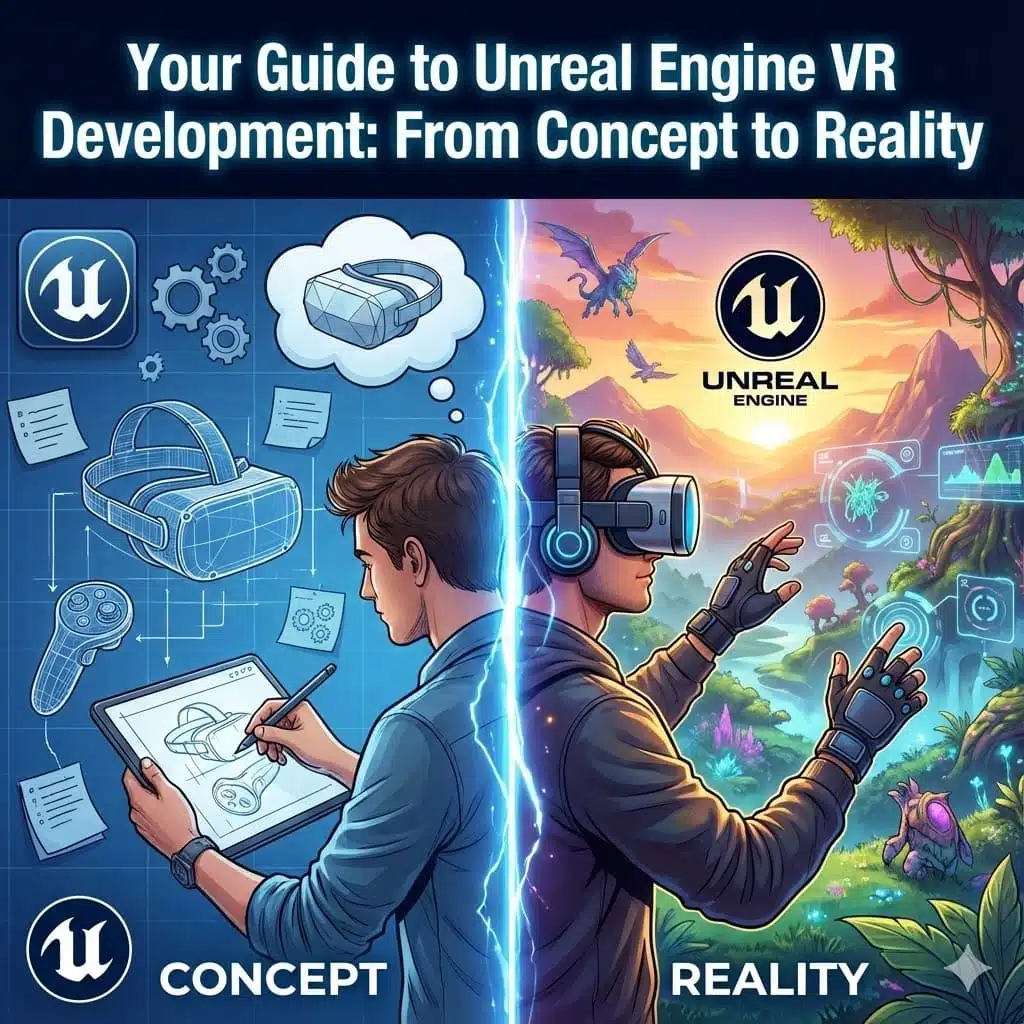
Virtual Reality (VR) has transcended gaming to become a transformative tool for education, professional training, and immersive brand experiences. You may have a groundbreaking idea for a VR application, but turning that concept into a functional, polished product can be daunting. Unreal Engine stands as one of the most powerful platforms for creating stunningly realistic VR worlds, yet its complexity presents a significant barrier for newcomers. How do you bridge the gap between your vision and a tangible VR experience?
For those determined to venture into VR development themselves, a structured approach is crucial. Embarking on your Unreal Engine game development journey involves several key stages:
1. **Project Definition and Planning:** Before writing a single line of code, clearly define your project. What is the core purpose—a game, a training simulation, an architectural visualization? Who is your target audience? Which VR hardware are you targeting (e.g., Meta Quest, PCVR)? A detailed plan will serve as your roadmap and prevent scope creep later on.
2. **Environment Setup:** Your first technical step is to prepare your development environment. This involves installing the correct version of Unreal Engine from the Epic Games Launcher. You will also need to enable and configure the necessary plugins for your target VR platform, such as the OpenXR plugin, which provides a standard for accessing VR and AR devices.
3. **Prototyping Core Interactions:** With your project set up, focus on building the fundamental mechanics. Using Unreal Engine’s visual scripting system, Blueprints, you can prototype key VR interactions without deep coding knowledge. Start with basics like teleportation or smooth locomotion, object grabbing and manipulation, and user interface interaction. Test these mechanics relentlessly inside the headset to ensure they feel intuitive and comfortable.
4. **Asset Integration:** A VR experience is defined by its visual and auditory assets. You can source 3D models, materials, and sounds from the Unreal Engine Marketplace or create your own using software like Blender and Substance Painter. The key is to import these assets and optimize them for performance, as VR applications demand high frame rates to prevent motion sickness.

While the DIY path is rewarding, it is also immensely time-consuming and requires mastering a vast array of skills, from 3D modeling and C++ programming to performance optimization and user experience design. For projects that demand a professional level of polish, efficiency, and expertise, collaborating with a seasoned developer is the most effective route to success.
This is where a specialist like Stephan can elevate your project from a concept to a market-ready reality. With over five years of dedicated professional experience in Unreal Engine development, Stephan brings a depth of knowledge that is essential for navigating the complexities of VR. His expertise isn’t limited to just game development; he has a proven track record in building a wide spectrum of interactive experiences, including advanced VR and AR applications.
What sets Stephan apart is his versatility and strategic approach. He has the technical skill to develop anything from a heart-pounding VR game to a highly detailed educational experience or a sophisticated professional training module. He understands that every project is unique and doesn’t offer a one-size-fits-all solution. His process begins with a collaborative deep-dive into your idea. He will work with you to analyze your requirements, formulate a comprehensive development plan, and establish clear milestones. This ensures that the final product aligns perfectly with your vision, budget, and timeline. If you’re ready to bring your VR idea to life with a reliable and skilled professional, Stephan is ready to build it with you.

